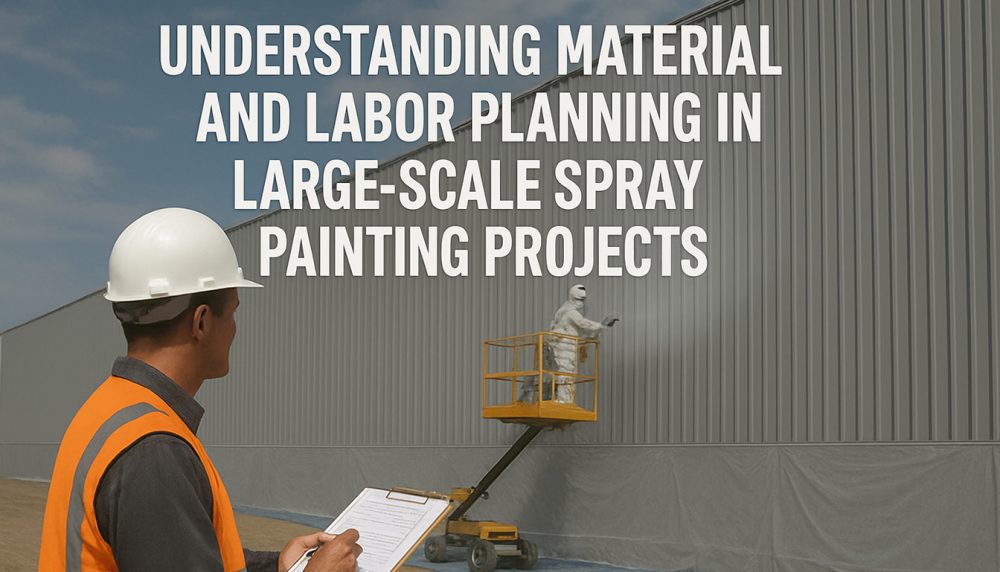
Large-scale spray painting projects require precise coordination to ensure high-quality results, efficient workflows, and accurate cost control. Whether the project involves commercial buildings, industrial facilities, or large residential developments, planning plays a crucial role. Today, many contractors rely on professional painting estimating services to predict material quantities, labour demands, and timelines before work begins. But behind these tools lies a deeper framework of material and labour planning that shapes every spray painting project.
Why Planning Matters in Spray Painting Projects
Spray painting is often one of the final stages of a construction or renovation project, but its impact is significant. A delay in the painting phase can slow down other trades, affect final inspections, or disrupt the handover process. Most issues, however, are preventable with upfront planning.
Effective planning helps ensure:
Related Posts:



- Smooth workflow across large surfaces
- Proper drying and curing times
- Accurate material allocation
- Efficient crew scheduling
- Reduced rework and waste
Spray painting requires precision, and that precision starts with early-stage planning.
Material Planning for Spray Painting
Material planning for spray painting involves far more than selecting the right colour. It includes calculating quantities, choosing the correct type of coating, and ensuring materials arrive on time without creating unnecessary storage challenges.
Key elements of spray painting material planning include:
- Surface measurements
- Coating type and thickness requirements
- Environmental conditions (humidity, temperature, airflow)
- Overspray and waste factors
- Equipment and nozzle specs
- Drying and recoat times
Even small miscalculations can affect workflow. Underestimating materials may halt the job, while overestimating ties up unnecessary budget.
This is why many contractors use painting cost estimation services, which take into account material usage rates and spray equipment output to provide more reliable projections.
Labour Planning for Spray Painting Efficiency
Labor planning is essential in spray painting, where timing, technique, and coordination directly affect finish quality. Spray painting crews operate differently from traditional brush-and-roller teams; they require specific skills, equipment handling knowledge, and synchronized workflow.
Effective labor planning looks at:
- Skill levels and spray experience
- Productivity rates for different spray systems
- Number of workers needed per stage
- Site accessibility and safety requirements
- Scheduling to avoid disruption or overspray
- Coordination with prep teams and finishing teams
Proper labor planning ensures that each step from masking and priming to spraying and finishing flows without conflict or downtime.
How Technology Supports Spray Painting Projects?
Modern technology has reshaped how spray painting projects are planned and executed. Tools and software help improve accuracy, reduce errors, and streamline decision-making.
Common technologies include:
- Digital measuring tools
- Moisture and surface preparation scanners
- Spray material calculators
- Project management apps
- Cloud-based scheduling systems
Professional painting estimating services now integrate these tools to provide more precise timelines and material forecasts, helping teams plan better and reduce the risk of unexpected costs.
Importance of Sequencing in Spray Painting
Spray painting requires a defined sequence to ensure consistency and avoid defects such as patchiness, drips, or uneven coverage.
Typical spray painting sequence:
- Surface cleaning and preparation
- Masking and protection of surrounding areas
- Priming (spray-applied)
- First coating
- Drying/curing
- Second coating
- Inspecting and final touch-ups
If this sequence is disturbed, it can affect adhesion, finish uniformity, and project efficiency.
Challenges in Spray Painting Planning
Even well-prepared spray painting projects can encounter challenges such as:
- Weather changes for outdoor work
- Equipment malfunctions
- Supply delays
- Inaccurate measurements
- Surface irregularities
- Unexpected site conditions
Good planning incorporates buffer times and alternative strategies to manage these issues without delaying the project.
Sustainability and Waste Reduction in Spray Painting
Spray painting can be highly efficient when planned correctly. Accurate planning reduces material waste, energy use, and unnecessary overspray.
Sustainable planning includes:
- Measuring precise coverage rates
- Choosing low-waste spray systems
- Storing materials properly
- Avoiding overordering
- Reducing rework through early inspections
Efficient planning not only protects the environment but also lowers costs.
Final Thoughts
Material and labour planning are essential elements of successful spray painting projects. Whether it’s a large industrial facility or a multi-unit residential building, the quality of the finish depends heavily on early preparation and structured workflow management. In some projects, spray painting teams also work alongside companies offering complete renovation services, ensuring all preparatory and finishing stages align smoothly. These additional trades help streamline the workflow and maintain high standards across the entire site. By combining skilled labour, detailed scheduling, and modern tools—including professional painting estimating services and reliable painting cost estimation services—contractors can achieve precise, efficient, and visually consistent spray painting results.
If you’re looking to maximise efficiency and finish quality, explore our Commercial Spray Painting Services in Edinburgh:
👉 Commercial Spray Painting Services in Edinburgh
You can also read more about why spray painting is often the superior choice in our guide to the Top 7 Benefits of Paint Spraying Over Traditional Painting:
👉 Top 7 Benefits of Paint Spraying Over Traditional Painting